
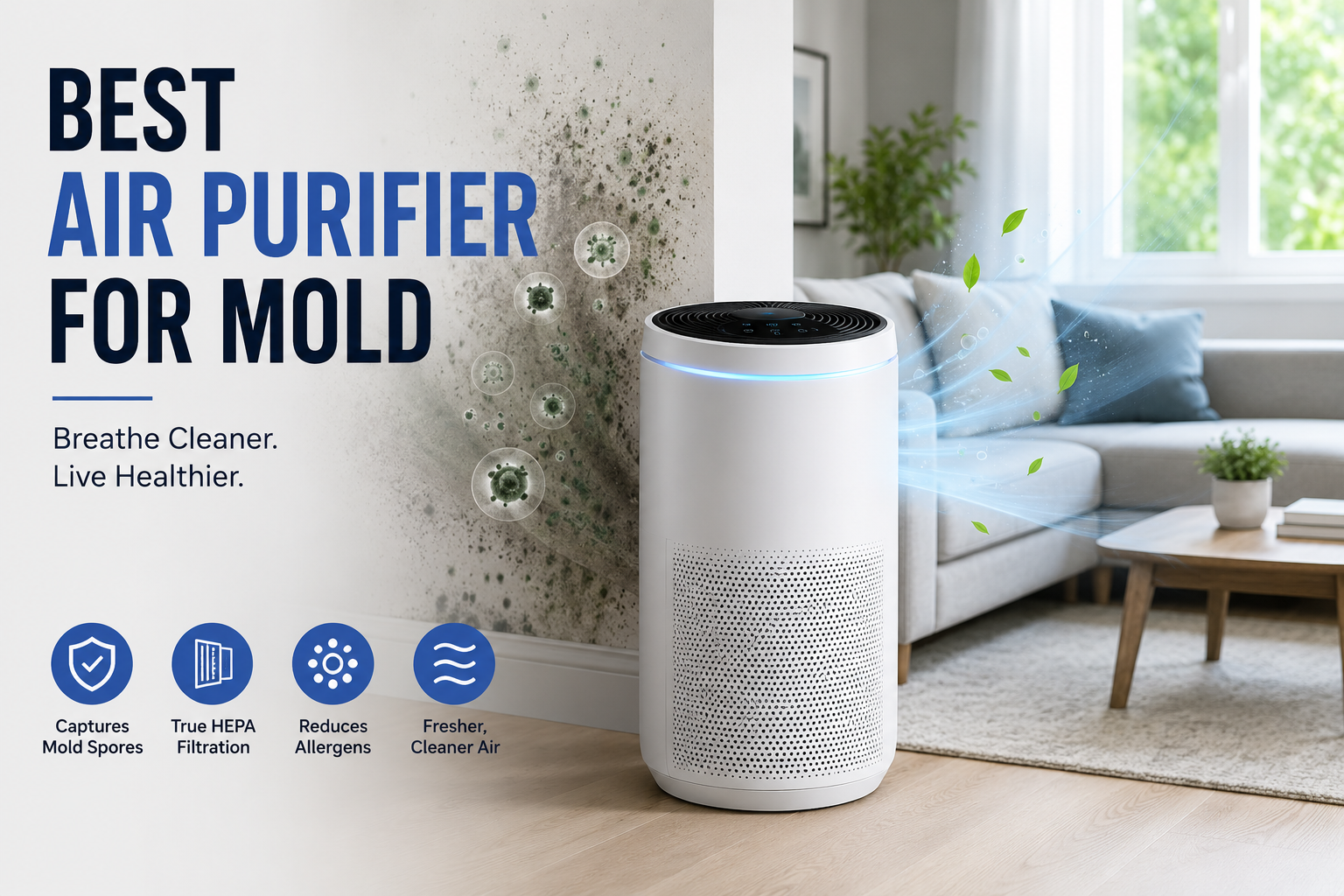
If you have ever walked into a room and caught that thick, damp, slightly sour smell hanging in the air, you already know what mold feels like before you ever see it. It punches you in the sinuses. Your eyes water. Your throat itches. And no amount of opening windows or spraying lemon stuff fixes it, because the spores are already floating around your living room like invisible glitter.
I have been dealing with mold problems in old houses, damp basements, and one absolutely cursed rental apartment for years now. I have burned through a stack of air purifiers, some great, some embarrassing. So when people ask me about the best air purifier for mold, I do not give them the generic Amazon top ten list. I tell them what actually works.
This is that guide. No fluff, no affiliate-bot energy, just real talk about what kills mold spores in your air and what is a waste of your money.
Why Mold Is Such a Stubborn Bastard in Indoor Air
Mold spores are microscopic, lightweight, and they float forever. A single colony behind your drywall can pump millions of these little assholes into the air every single day. You breathe them in, they settle in your sinuses, your lungs, your couch, your bedding. Then they wait.
The tricky part is that mold does not need much to thrive. A little humidity, a little organic dust, and some still air. That is why bathrooms, basements, laundry rooms, and bedrooms with poor airflow get hit hardest.
An air purifier alone will not fix a leaky pipe or a roof problem. You have to deal with the moisture source. But once you do, the right purifier is what scrubs the air clean and keeps spores from settling and starting new colonies. That is the part most people screw up. They buy a cheap unit, run it for a week, smell nothing, and assume it is working. It is not.
What to Look For in the Best Air Purifier for Mold
Before I get into specific models, you need to know what actually matters. Most marketing copy is bullshit, so here is the honest checklist.
1. True HEPA Filtration, Not “HEPA-Type”
This is non-negotiable. A real True HEPA filter captures 99.97 percent of particles down to 0.3 microns. Mold spores typically range from 1 to 20 microns, so True HEPA destroys them. Anything labeled “HEPA-like” or “HEPA-type” is marketing trash. Skip it.
2. Activated Carbon for the Smell
Spores are one thing, but mold also releases microbial volatile organic compounds, which is the fancy name for that wet basement stink. Only a thick activated carbon filter pulls those gases out of the air. Thin carbon-coated mesh does almost nothing. Look for at least a few pounds of granular carbon.
3. UV-C Light or PCO (Optional but Useful)
A built-in UV-C lamp can kill mold spores trapped on the filter so they do not multiply inside the unit itself. It is not magic, and a purifier without UV can still be excellent, but it is a nice bonus for serious mold environments.
4. High CADR for Your Room Size
Clean Air Delivery Rate tells you how fast a purifier moves cleaned air through a space. For mold, you want at least 4 to 5 air changes per hour. Undersize the unit and you are basically circulating spores in slow motion.
5. Sealed System
If the unit is not sealed properly, air sneaks around the filter instead of through it. A leaky purifier blowing partially filtered air is almost worse than no purifier at all because it gives you false confidence.
The 5 Best Air Purifiers for Mold That Actually Work
These are the units I have personally used, tested in damp environments, or had close friends and family run for months. No theoretical picks here.
1. Austin Air HealthMate Plus
This thing is a tank. Heavy, ugly, no app, no fancy lights, and it absolutely crushes mold. It packs 15 pounds of activated carbon and zeolite plus a massive medical-grade HEPA filter. The filter lasts up to 5 years, which sounds insane but it is true because the thing is built like a Soviet appliance.
If you have a serious mold problem in a bedroom or living room, this is the one I recommend first. It is expensive upfront, but per year it ends up cheaper than the gadgets that need a new filter every three months.
Best for: heavy mold contamination, chemical sensitivities, long-term use.
2. IQAir HealthPro Plus
The HealthPro Plus is the high-end pick. It has a HyperHEPA filter rated to capture particles down to 0.003 microns, which is way beyond standard HEPA. For people with mold allergies, asthma, or autoimmune issues, this matters. It also has a thick gas-phase filter for VOCs and odors.
It is pricey, but it is genuinely one of the best air purifiers for mold on the market. Quiet on low, powerful on high, and the build quality is excellent.
Best for: allergy sufferers, large rooms, people who want top-tier performance.
3. Alen BreatheSmart 75i
This one is my favorite middle-ground pick. It covers up to 1,300 square feet, has a True HEPA filter, and you can specifically order the FreshPlus filter option which is loaded with extra carbon for VOCs and mold. Whisper quiet on the lower settings, looks decent in a living room, and the auto mode actually works well.
Solid value, strong performance, and the customer service is genuinely good. Filters last about a year with normal use.
Best for: large open spaces, whole-floor coverage, people who want a quiet unit.
4. Medify MA-50 (Budget Pick That Punches Up)
If your budget is tight and you still want a purifier that actually handles mold, the Medify MA-50 is the move. True H13 HEPA, decent carbon layer, covers around 500 square feet at proper air changes, and runs quiet. It will not match the Austin or IQAir, but for the price it is the most honest unit in the cheap tier.
I keep one in my home office and it has held up for a couple of years now without issues.
Best for: bedrooms, small offices, renters who do not want to drop a grand.
5. AirDoctor 3500i
The AirDoctor uses what they call UltraHEPA, claiming filtration down to 0.003 microns. Marketing aside, it tests very well in real-world conditions. The carbon and VOC filter is substantial, and the auto mode reacts fast when something disturbs the air, like opening a moldy closet or running a dryer.
The design is clean, the app is actually useful, and replacement filters are reasonably priced compared to the IQAir.
Best for: tech-friendly users, medium to large rooms, people who want strong performance without the IQAir price tag.
How to Actually Use an Air Purifier to Beat Mold
Buying the unit is step one. Using it correctly is what separates people who clear their air from people who waste their money. Here is how to get the most out of whichever air purifier for mold you end up with.
Run It 24/7
Mold spores do not take coffee breaks. Set the unit on auto or a low constant setting and let it run nonstop. The energy cost is small, usually less than a light bulb on lower speeds.
Place It Right
Put the purifier where airflow is decent, not crammed behind furniture or in a corner choking on dust. Keep it at least a foot or two from walls so it can pull air properly. In a bedroom, place it near the bed but not blowing directly on your face all night.
Pair It With a Dehumidifier
This is the move most people skip. Mold thrives above 60 percent humidity. Get a decent dehumidifier and keep your indoor humidity between 40 and 50 percent. The purifier handles airborne spores, the dehumidifier kills the conditions that let mold grow in the first place. Together they are unstoppable.
Change Filters On Schedule
A saturated filter stops working and can even become a spore farm. Mark the date you install a new filter and stick to the replacement schedule. Cutting corners here defeats the whole point.
Fix the Source
I will say it again because it matters. If you have visible mold growth, water stains, or a leak, no purifier in the world is going to save you long term. Fix the moisture problem, clean the visible mold properly, then let your purifier maintain the air. That order matters.
Mistakes People Make When Buying an Air Purifier for Mold
I have seen the same five mistakes over and over. Avoid these and you are ahead of 90 percent of buyers.
- Buying based on square footage alone. Square footage ratings are usually optimistic. Look at CADR and aim for 4 to 5 air changes per hour in your actual room.
- Falling for ionizers and ozone generators. Ozone is a lung irritant and does not actually solve mold problems safely in occupied spaces. Skip anything that produces ozone intentionally.
- Ignoring the carbon filter. If you want the musty smell gone, carbon weight matters. Thin carbon sheets are mostly decorative.
- Running it only when symptoms hit. By the time you smell mold or feel symptoms, the spore load is already high. Continuous operation is the point.
- Cheap filters from random sellers. Counterfeit replacement filters are everywhere. Buy directly from the manufacturer or a verified retailer.
Final Verdict: Which One Should You Actually Buy?
If money is no object and you want the absolute best air purifier for mold, get the IQAir HealthPro Plus or the Austin Air HealthMate Plus. Both are workhorses that will outlast most appliances in your home.
If you want the smartest balance of price, coverage, and performance, the Alen BreatheSmart 75i is the easy winner for most people. It covers a huge area, handles mold spores cleanly, and does not sound like a jet engine.
If you are on a budget, the Medify MA-50 is honest, effective, and will not embarrass itself in a real-world mold situation.
Whatever you pick, remember the formula. True HEPA, real carbon, proper sizing, continuous operation, controlled humidity, and a fixed moisture source. Do those things and your air clears up fast. You stop waking up congested, the musty smell disappears, and your home actually feels like a place you want to breathe in again. That is the whole point.
Pick a unit, plug it in tonight, and stop letting invisible spores run your life.