
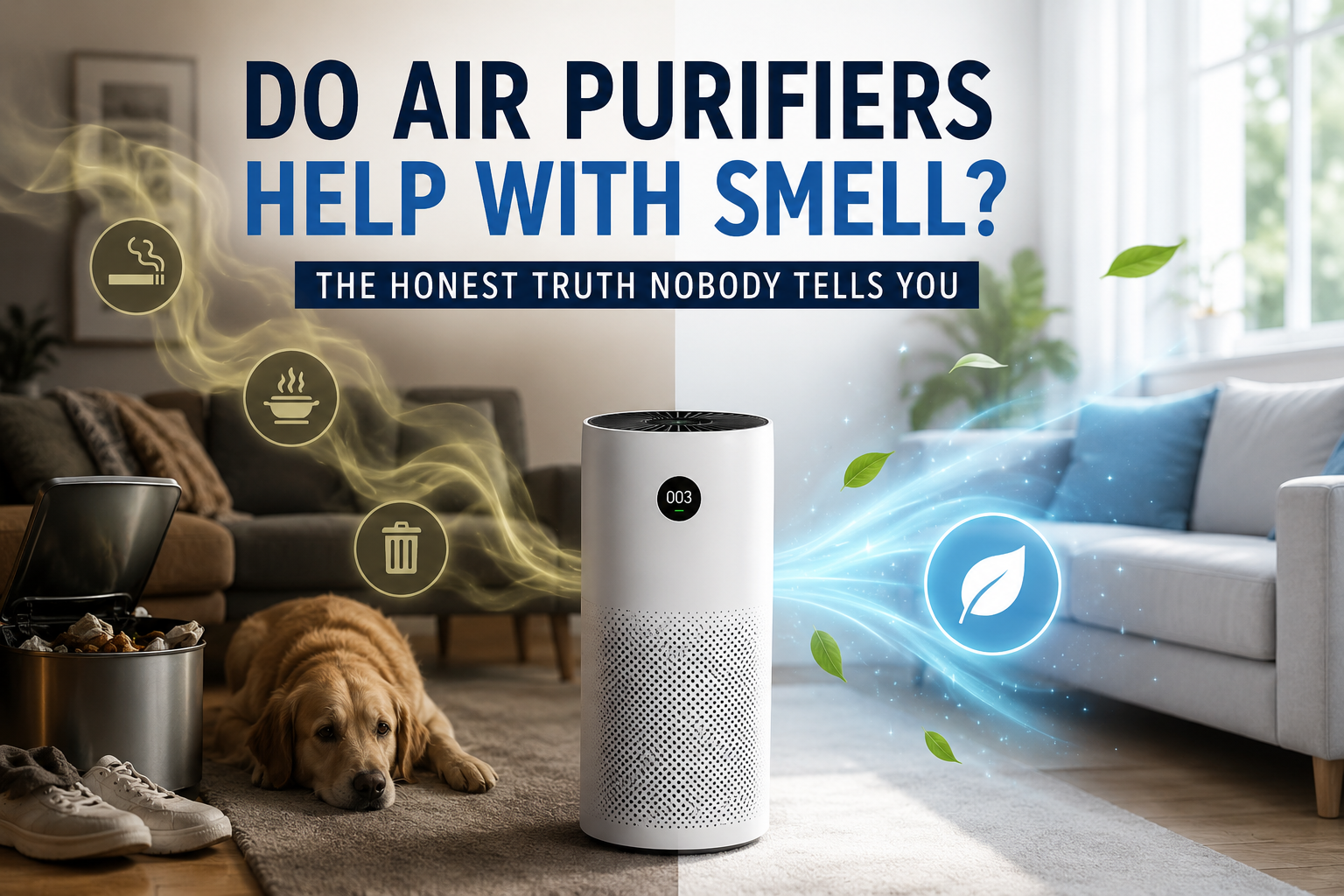
Short answer? Yes, but only if you buy the right one. The market is flooded with cheap units that move air around and do absolutely nothing for the funk in your house. I have tested more purifiers than I care to admit, and the gap between marketing claims and reality is wider than most people think.
So let’s cut through the noise. Air purifiers do help with smell, but only when they have the right filter inside. The little HEPA-only box your cousin swears by is not going to touch the smell of last night’s fish dinner or your dog’s questionable habits.
This guide breaks down what actually works, what is marketing fluff, and how to pick a purifier that genuinely makes your home smell like nothing instead of like a wet ashtray.
How Air Purifiers Actually Handle Odors
Here is the part most blog posts skip. Smells are not solid particles floating around in the air. Smells are gases, specifically volatile organic compounds, also known as VOCs. A standard HEPA filter is designed to catch tiny solid particles like dust, pollen, and pet dander. It cannot trap gas molecules. Period.
What actually traps odors is activated carbon. Carbon works through a process called adsorption, where gas molecules stick to the porous surface of the carbon and stay there. The more carbon a purifier has, and the better quality that carbon is, the more smell it can handle.
So when someone asks me, do air purifiers help with smell, my first question back is always the same. Does yours have activated carbon, and if so, how much? Because a few hundred grams of carbon dust glued to a filter is not going to save your living room.
The Three-Stage Filtration That Actually Works
The purifiers that genuinely kill smells almost always use a three-stage system. Skip any one of these and you are wasting money.
- Pre-filter for catching hair, lint, and large debris so the rest of the filters last longer
- True HEPA filter for removing 99.97 percent of airborne particles down to 0.3 microns
- Activated carbon filter for absorbing gases, smoke, cooking smells, pet odors, and chemical fumes
- Optional UV-C light or ionizer for killing bacteria and mold spores that contribute to musty smells
- Smart sensors that detect VOCs and bump fan speed automatically when something stinks
What Smells Air Purifiers Crush Easily
Some odors are basically a layup for a decent purifier with carbon. If your problem falls into any of these categories, you are going to be a happy camper within hours of plugging the thing in.
Cooking Smells
Fried fish, burnt garlic, bacon grease, curry, whatever your kitchen sins are, a good purifier handles them. Cooking odors are mostly grease particles mixed with VOCs, and the combo of HEPA plus carbon eats them alive. Run the unit on high while you cook and for about an hour after. Easy.
Pet Odors
Litter boxes, wet dog, that weird funk that builds up on a cat tree, all of it. Activated carbon is brutally effective on pet smells because the compounds causing them are exactly what carbon is designed to grab. If you have multiple animals, get a unit rated for a room one and a half times the size of yours, because pet households produce more odor than the average home.
Cigarette and Weed Smoke
This is where carbon truly earns its keep. Smoke is a mix of fine particulate and a cocktail of VOCs. A HEPA filter alone grabs the particulate but leaves the smell. A serious carbon filter, and I mean five pounds or more of real granulated carbon, can pull cigarette and cannabis smell out of a room within thirty to sixty minutes.
Body Smells and Bedroom Odors
Let’s be adults here. Sweat, sex, post-workout funk, morning breath lingering in a bedroom, all of that is gas plus particulate. A purifier with carbon running quietly in the corner keeps the bedroom smelling neutral even after the most enthusiastic nights. If you have ever wondered why a hotel room never smells like the last guest, the answer is good ventilation plus filtration.
Garbage and Trash Odors
Running a purifier near the kitchen trash can dramatically reduce that sour, rotting smell that builds up in summer. It does not replace taking the trash out, but it buys you time and keeps the rest of the house from smelling like a dumpster.
What Air Purifiers Struggle With
I am not going to lie to you. There are smells a purifier alone cannot fix, no matter how much you spend. Knowing the limits saves you from buyer’s remorse.
Mold Behind Walls
If you smell mold and there is actual mold growing in a wall, under a floor, or in your HVAC system, a purifier will only mask the problem. It can kill airborne spores and reduce the musty smell in the air, but it cannot reach the source. You need remediation, not a filter.
Sewage and Drain Smells
That rotten egg smell from a dry P-trap, a cracked sewer line, or a failing toilet seal is not something a purifier can handle long term. The source keeps pumping out gas faster than carbon can absorb it. Fix the plumbing, then let the purifier clean up what is left.
Strong Chemical Odors
Fresh paint, new carpet off-gassing, gasoline spills, and industrial cleaners overwhelm even good carbon filters quickly. A purifier helps, but you also need open windows, time, and patience. Carbon saturates fast around heavy VOC sources, so expect to replace filters more often.
Dead Animal Smell
If a mouse died in your wall, no air purifier on Earth is going to save you. Find the carcass. Trust me.
How Much Carbon Do You Actually Need?
This is the question that separates serious buyers from people who get scammed. The amount of activated carbon in a purifier directly determines how well it handles smell. Most cheap units have between 100 and 300 grams of carbon, which is honestly pathetic for anything beyond mild odors.
If you are serious about killing smell, you want a unit with at least one full pound of carbon, ideally two to five pounds for heavy smoke, pet, or chemical odor problems. Brands like IQAir, Austin Air, and Airpura load their purifiers with multiple pounds of pelletized carbon, which is why they cost more and actually work.
Quick reference for how much carbon you need based on your situation:
- Light cooking and general freshness: 200 to 500 grams is fine
- Pets in the home: 1 to 2 pounds minimum
- One smoker in the household: 2 to 4 pounds
- Heavy smoke, chemical sensitivity, or VOC concerns: 5 pounds or more
- Multiple pets plus smoking plus cooking: Stack two units or buy a commercial-grade purifier
Room Size and Air Changes Per Hour
The other thing nobody tells you. A purifier rated for your room size on the box is usually rated at the absolute minimum, meaning one air change per hour. For odor control, you want four to five air changes per hour, which means you should buy a unit rated for a room two to three times the size of the one you are using it in.
For example, if your bedroom is 200 square feet, get a purifier rated for at least 500 to 600 square feet. This is the single biggest mistake people make, and it is why so many of them swear purifiers do not help with smell. They bought one that was too small and ran it on low, which is basically nothing.
Settings That Maximize Odor Removal
Buying the right purifier is only half the battle. Running it correctly is the rest. Here is what actually works.
Run It on High When Odors Hit
Auto mode is great for general air quality, but when you cook fish or your dog has a moment, crank it to high manually. Carbon needs a lot of air passing through it to grab VOCs effectively. Low fan speed equals weak odor performance, every single time.
Keep It Running 24/7
Purifiers are not meant to be turned on after a problem appears. They work best when they prevent buildup. Leaving yours on around the clock costs pennies per day and keeps your home neutral instead of constantly playing catch-up.
Replace Carbon Filters on Schedule
Carbon saturates. Once it is full, it stops working and can even start releasing absorbed odors back into the room. Replace carbon filters every six months in heavy-odor homes and every twelve months in lighter use cases. Do not skip this. A saturated filter is worse than no filter at all.
Position Matters More Than You Think
Put the purifier near the source of the smell, not in a corner where it looks pretty. Near the litter box, near the kitchen, near the bedroom door. Air has to pass through the filter to be cleaned, so help it out by placing the unit smartly.
Brands Worth the Money
I am not getting paid by any of these companies, so take this as honest opinion from someone who has tested a lot of junk.
- Austin Air HealthMate Plus, the gold standard for heavy odor and chemical removal, with 15 pounds of carbon and zeolite
- IQAir GC MultiGas, expensive but unmatched for VOC and gas filtration in serious situations
- Airpura V600, another heavyweight built specifically for chemical and odor control
- Coway Airmega 400, solid mid-range choice for pets and general household odors
- Levoit Core 600S, budget-friendly with decent carbon for the price, good for bedrooms and small living rooms
So Do Air Purifiers Help With Smell or Not?
Absolutely yes, when you buy one with real activated carbon, size it correctly for your space, run it on high when needed, and replace the filters on time. Skip any of those steps and you are going to be disappointed.
The truth is most people who say purifiers do not help with smell bought a cheap unit with a token amount of carbon, ran it on low in a room too big for it, and gave up. That is not a purifier problem. That is a homework problem.
Get the right machine, treat it right, and your house will smell like nothing. Which, when it comes to indoor air, is exactly what you want. Pull the trigger on a real purifier, and you will wonder how you ever lived without one.