
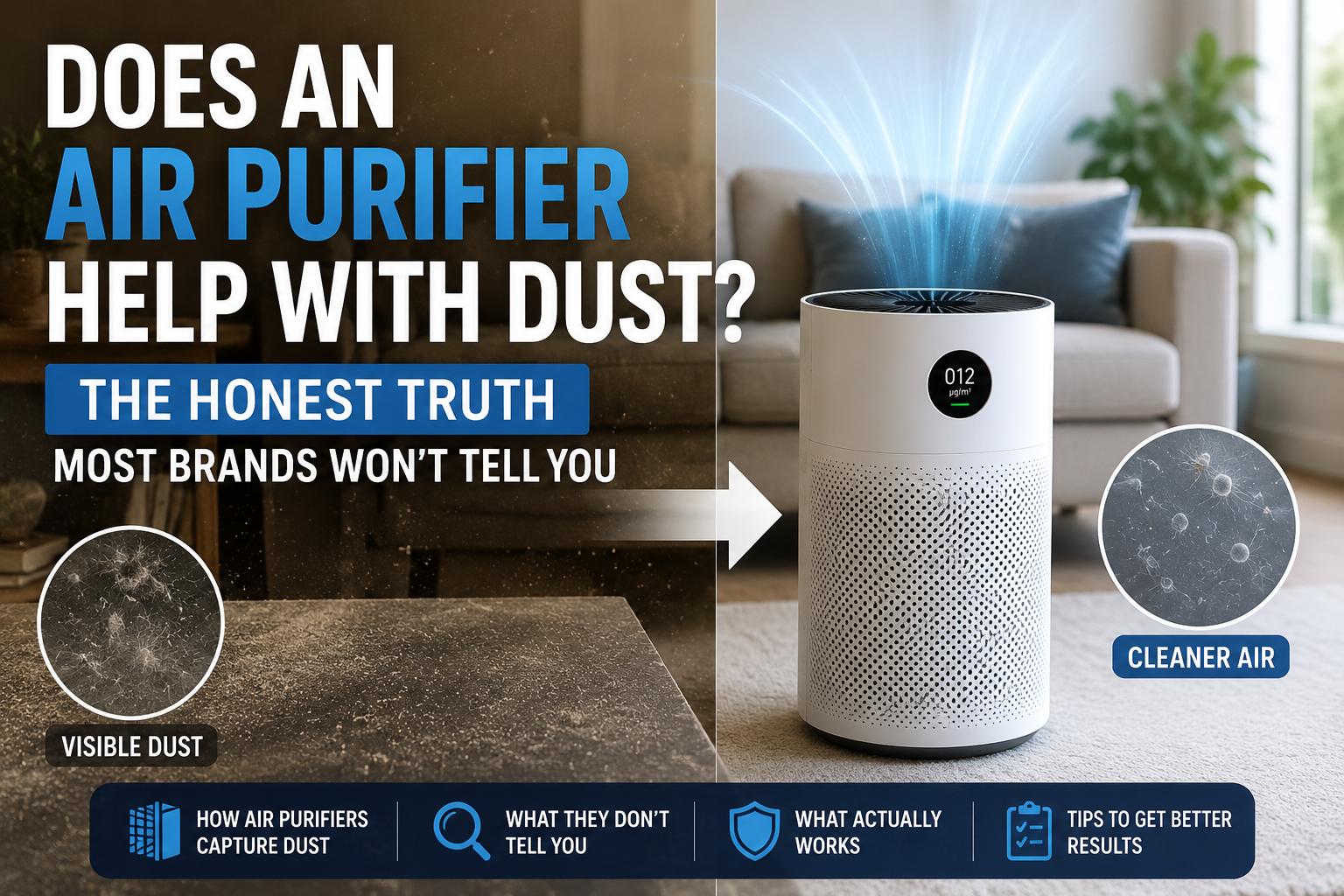
If you’ve ever wiped down a shelf on Sunday and watched a fresh layer of grey fuzz settle back on it by Wednesday, you already know how relentless dust is. It never stops. It just keeps coming. And somewhere in the middle of yet another sneezing fit, you’ve probably asked yourself the obvious question.
Does an air purifier help with dust, or is it just another overpriced gadget that hums in the corner doing nothing?
Short answer, yes, a good air purifier absolutely helps with dust. But the longer answer is way more interesting, and honestly, it’s the part most brands conveniently leave out of their shiny marketing pages.
Let’s get into it properly.
What Dust Actually Is (And Why It Matters)
Before we talk about whether an air purifier helps with dust, you need to understand what dust actually is, because it’s grosser than most people realize.
Household dust isn’t one thing. It’s a chaotic cocktail of dead skin cells, pet dander, fabric fibers, dust mite droppings, pollen, mold spores, bacteria, soil tracked in from outside, and tiny bits of basically everything that exists in your home. Some of it floats in the air for hours. Some of it crashes onto surfaces in minutes.
The floating stuff is what an air purifier can grab. The heavy stuff that settles fast on your coffee table? That part still needs a duster and your own two hands.
This is the first thing nobody tells you. Air purifiers handle airborne dust, not surface dust. Once you get that, everything else makes sense.
Yes, an Air Purifier Helps With Dust, Here’s How It Actually Works
A real air purifier with a proper HEPA filter pulls air in, traps particles in a dense pleated filter, and pushes clean air back out. A true HEPA filter captures 99.97 percent of particles down to 0.3 microns. For context, most dust particles are way bigger than that, which means HEPA filters destroy them.
So when you run a quality unit, here’s what actually happens in your room:
- Floating dust gets sucked in and trapped before it can land on surfaces
- Dust mite waste particles in the air get filtered out
- Pet dander stops drifting around your living room
- Pollen that snuck in through an open window gets caught
- Mold spores floating around your bathroom or basement get neutralized
The result, less dust settling on your furniture, fewer allergy flare-ups, easier breathing at night, and a home that genuinely feels cleaner.
The Catch Nobody Talks About
Here’s where things get real. An air purifier helps with dust, but only if you set it up right. A lot of people buy one, plug it in, and then wonder why their house still looks dusty. Then they leave a one-star review claiming the thing is useless.
It’s not useless. They just used it wrong.
Room Size Matters More Than You Think
If you buy a small purifier rated for 200 square feet and stick it in a 600 square foot open-plan living room, you’re basically pissing into the wind. The unit can’t move enough air to make a difference. Always match the CADR rating and coverage area to your actual room size. Honestly, go one size bigger than you think you need.
Run It 24/7 or Don’t Bother
Dust never sleeps. It’s being kicked up every time you walk, sit, breathe, fluff a pillow, or pet your dog. If you only run your purifier for two hours in the evening, you’re missing the other 22 hours where dust is freely floating around. The most effective approach is leaving it on constantly at a low or medium setting.
Placement Is Everything
Don’t shove it behind a couch or in a corner blocked by furniture. The unit needs clear airflow on all sides. Put it somewhere central, ideally near the source of the most dust, like next to your bed if you’re sensitive at night, or near the entrance where outdoor stuff comes in.
Best Types of Filters for Dust (Ranked Honestly)
Not every filter is built the same. If you actually want to know whether an air purifier helps with dust in your specific setup, the filter type matters a lot.
1. True HEPA Filters
This is the gold standard. True HEPA, not “HEPA-type” or “HEPA-like” which are marketing tricks. Look for the words “True HEPA” or “H13” on the label. These catch 99.97 percent of particles at 0.3 microns. Dust doesn’t stand a chance.
2. Activated Carbon Filters
These don’t trap dust as their main job, but they handle odors, smoke, and chemical fumes. Pair them with HEPA for the full package. Most decent purifiers include both layers already.
3. Pre-Filters
These are the unsung heroes. A pre-filter catches the big chunks, pet hair, lint, large dust bunnies, before they hit the HEPA layer. This extends the life of your main filter significantly. Vacuum or rinse the pre-filter monthly and your unit will last years.
4. Ionizers (Skip These)
Honestly, avoid them. Ionizers charge particles so they stick to surfaces instead of floating. That doesn’t remove dust from your home, it just relocates it onto your walls and furniture. Some also produce ozone, which is bad for your lungs. Hard pass.
5. UV-C Lights
Marketed as germ killers, not dust removers. Don’t buy a purifier just for UV-C if dust is your main concern. It’s a nice bonus, not the main event.
What Kind of Dust an Air Purifier Actually Removes
Let’s break down exactly what your purifier is capable of handling, because not all dust is created equal.
Pet Dander and Hair Particles
If you have a cat, dog, rabbit, or any furry roommate, an air purifier is a game changer. Dander particles are tiny and they float forever. A HEPA unit grabs them out of the air before they trigger your allergies or coat your furniture.
Dust Mite Droppings
This sounds disgusting because it is. Dust mites live in your mattress, pillows, and couches, and their waste is a major allergy trigger. When you move around, those microscopic particles get airborne. A purifier scoops them up.
Pollen and Outdoor Allergens
Open a window for ten minutes in spring and your home becomes a pollen disco. Your purifier filters this out fast, especially useful for hay fever sufferers who need a break.
Mold Spores
Bathrooms, basements, and damp corners breed mold. The spores travel through the air and settle wherever they please. HEPA filters trap them before they spread.
Fine Particulate Matter (PM2.5)
This is the dangerous stuff, super tiny particles from cooking, candles, traffic pollution, and wildfire smoke. They embed deep in your lungs. A solid air purifier handles them beautifully.
What an Air Purifier Won’t Do for Dust
I’m not here to oversell you anything. There are limits, and you should know them before you buy.
- It won’t clean dust that’s already settled on shelves, blinds, or under your bed
- It won’t replace vacuuming, mopping, or wiping down surfaces
- It won’t fix a dusty home if your HVAC filter is filthy or your ducts are a disaster
- It won’t help much if windows are constantly open and outdoor dust is pouring in
- It won’t work if you forget to change the filter every 6 to 12 months
Think of an air purifier as a strong teammate, not a maid. It does its part brilliantly, but you still need to do yours.
How to Get the Most Out of Your Air Purifier for Dust
Want to actually feel the difference, not just hope you’re feeling one? Follow these moves and your dust problem becomes manageable fast.
Vacuum With a HEPA Vacuum
A cheap vacuum just blows fine dust back into the air. Pair your purifier with a vacuum that has a HEPA filter so you’re not undoing the work.
Wash Bedding Weekly in Hot Water
Your bed is dust mite paradise. Hot water washes destroy them and their nasty droppings.
Keep Humidity Between 40 and 50 Percent
Too dry, dust floats more. Too humid, mold and mites thrive. Get a cheap humidity meter and stay in the sweet spot.
Change Filters on Schedule
A clogged filter is basically a paperweight. Mark your calendar. Most HEPA filters need replacing every 6 to 12 months depending on usage.
Declutter Surfaces
Every knick-knack, photo frame, and book on display is a dust magnet. The fewer surfaces, the less dust accumulates.
So, Is It Worth the Money?
Look, I’ll be straight with you. If you have allergies, asthma, pets, kids, or you just hate the feeling of grit on your nightstand, a quality air purifier is absolutely worth every cent. The difference after a week of running one is genuinely noticeable. Less sneezing, fewer dust layers, easier breathing, deeper sleep.
Skip the cheap no-name units on Amazon that promise the world for 40 bucks. Invest in something with a real True HEPA filter, the right CADR for your room, and a brand that actually backs its product. You’ll thank yourself.
Final Word
Does an air purifier help with dust? Hell yes, it does, and the difference is real when you set it up right. It won’t magically replace your cleaning routine, and it won’t fix every dust problem in a house with structural issues or constant outdoor exposure. But as a daily tool that quietly works in the background, it’s one of the best upgrades you can make for your home and your lungs.
Get a proper HEPA unit, size it right, run it constantly, change the filter, and pair it with smart cleaning habits. Do that, and dust stops being the enemy that always wins. Your home will feel fresher, your allergies will calm down, and you’ll stop questioning whether the air around you is working for or against you.
You deserve a home that actually feels clean. An air purifier is one of the simplest ways to get there.